GCA Curriculum Product
Global Childhood Curriculum
A future-ready curriculum framework for ages Birth–5, built for modern early years practice across diverse cultural, regulatory and language contexts.
-
Built by Global Childhood Academy (GCA)
-
Delivered via Arabian Child
-
Arabic & English-ready
Request Curriculum Pack →
View What’s Included
10
Areas of learning
7
Pillars of learning
90 days
Typical implementation ramp
Designed to convert to practice
Not a “PDF curriculum.” Includes planning tools, observation systems, inclusion guidance and leadership orientation.
Future-ready by design
Integrates ethics, sustainability, STEAM, design thinking and responsible technology engagement.
Globally relevant, locally adaptable
Works across different licensing systems without restricting your positioning or audience.
The foundation
Seven pillars that drive learning design.
These pillars define how children are understood, how learning is designed, and how practice responds to contemporary childhood.
Born Competent
Children are capable from the start — learning builds on what already exists.
Unconditional Belonging
Well-being, identity and safety are non-negotiable foundations.
Curiosity First
Inquiry, exploration and meaning-making drive engagement.
Purposeful Challenge
Children thrive when experiences stretch thinking with support.
Unique Contribution
Every child brings strengths and perspectives that matter.
Global Citizenship
Empathy, ethics and community participation from the early years.
Future Readiness
Skills, dispositions and mindsets for an evolving world.
Built by Global Childhood Academy
A future-ready early childhood curriculum — research-based and expert-developed.
The Global Childhood Curriculum is developed by Global Childhood Academy (GCA) as a future-ready curriculum product for modern early years practice. It is built on research, designed for real-world implementation, and developed with input from leading experts in early childhood education and child development.
This is not a theme pack or activity bank — it is a structured curriculum framework with clear pillars, areas of learning, and implementation tools that leadership teams can manage.
Research-based foundation
Anchored in developmental science and contemporary early childhood research.
Expert-developed
Developed with input from recognized early years experts to ensure quality and credibility.
Future-ready by design
Integrates ethics, sustainability, STEAM, design thinking, and responsible technology engagement.
Visit Global Childhood Academy Website
Sequenced for Growth and Progression
A developmentally sequenced framework that grows with every child — from infancy to school readiness.
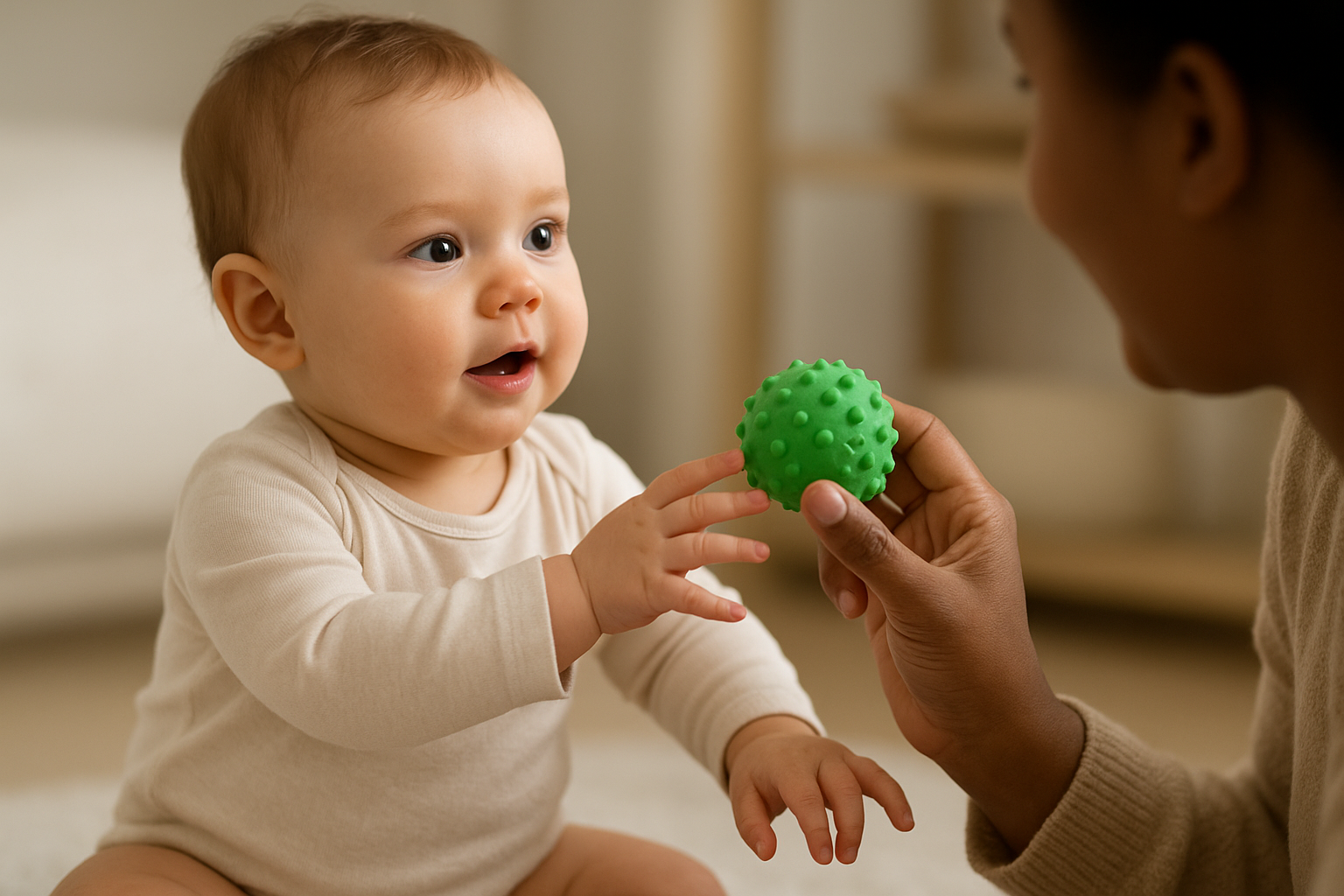
Learning begins through the senses. Babies explore sight, sound, and touch while forming secure attachments with caregivers. Every routine — feeding, holding, and play — builds the foundation for trust, communication, and brain development.

Toddlers grow into active explorers. They move with purpose, imitate adults, and start expressing themselves with simple words. Our framework supports curiosity, emotional security, and early social skills through responsive, play-based experiences.
Independence takes root. Children begin making choices, solving small problems, and showing imagination in play. Teachers scaffold communication, cooperation, and self-regulation through sensory-rich, small-group learning.
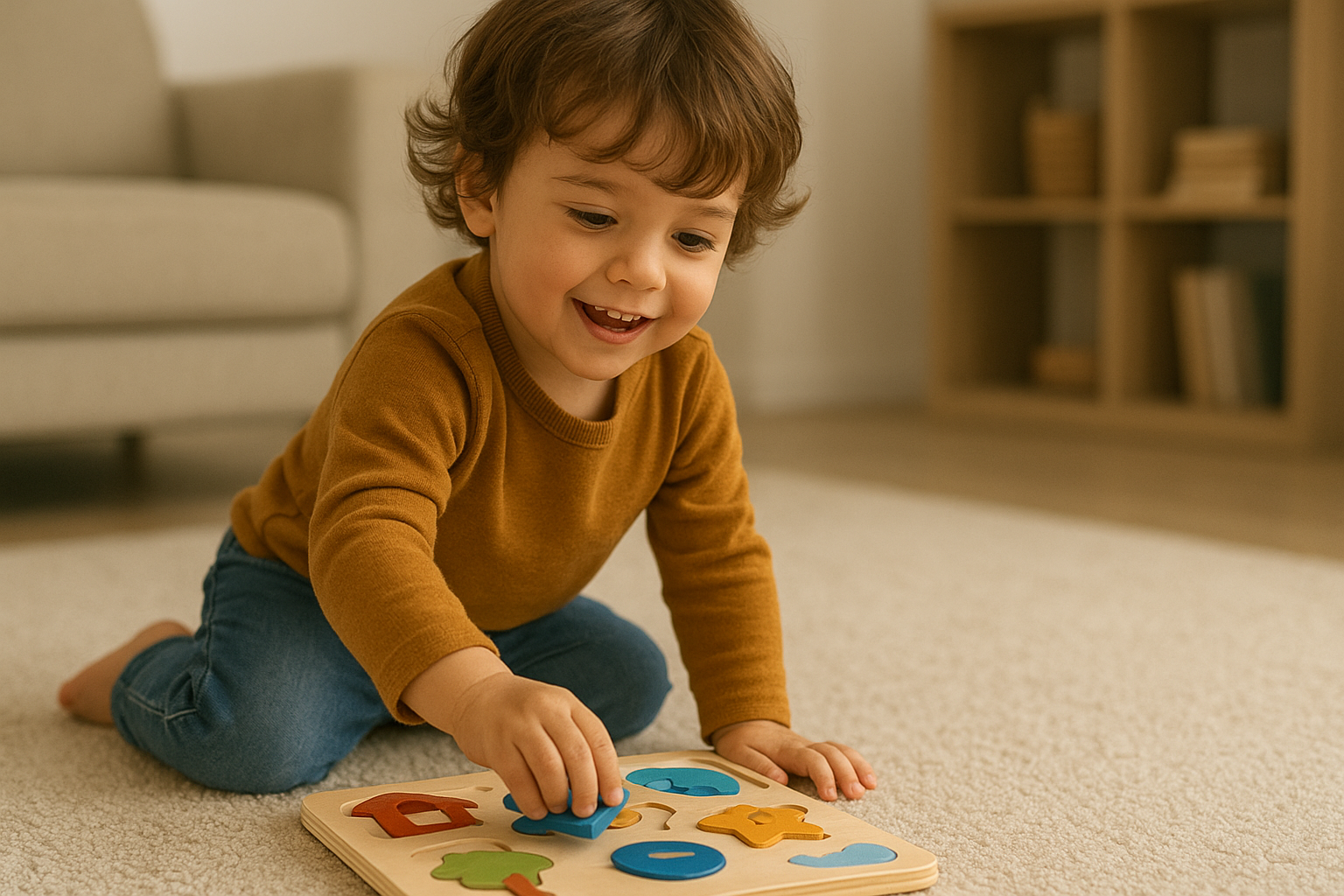
Confidence and collaboration emerge. Children expand their vocabulary, enjoy storytelling, and engage in purposeful play that connects ideas. Our approach strengthens early literacy, numeracy, and identity through active exploration.

Children prepare for school with deeper focus and creativity. They apply what they’ve learned, manage emotions, and think critically. Teachers guide them toward independence, resilience, and a love of learning that lasts beyond the classroom.
Learning begins through the senses. Babies explore sight, sound, and touch while forming secure attachments with caregivers. Every routine — feeding, holding, and play — builds the foundation for trust, communication, and brain development.
Toddlers grow into active explorers. They move with purpose, imitate adults, and start expressing themselves with simple words. Our framework supports curiosity, emotional security, and early social skills through responsive, play-based experiences.
Independence takes root. Children begin making choices, solving small problems, and showing imagination in play. Teachers scaffold communication, cooperation, and self-regulation through sensory-rich, small-group learning.
Confidence and collaboration emerge. Children expand their vocabulary, enjoy storytelling, and engage in purposeful play that connects ideas. Our approach strengthens early literacy, numeracy, and identity through active exploration.
Children prepare for school with deeper focus and creativity. They apply what they’ve learned, manage emotions, and think critically. Teachers guide them toward independence, resilience, and a love of learning that lasts beyond the classroom.
Curriculum architecture
Ten interconnected areas of learning.
Structured to reflect how children actually learn: play, relationships, language, inquiry, and purposeful experiences.
Structured to reflect how children actually learn: play, relationships, language, inquiry, and purposeful experiences. Security • Self-regulation • Belonging
Supports children to develop a secure sense of self, emotional awareness and confidence. Emotional well-being is treated as the foundation for engagement, exploration and learning.
2) Relationships, Communication and Social Participation Empathy • Collaboration • Participation
Builds respectful communication, cooperation and participation in social groups. Includes opportunities to practice communication in both face-to-face and supported digital contexts.
3) Language, Literacy and Meaning-Making Talk • Story • Multimodal literacy
Develops spoken language and early literacy through books, storytelling, mark-making and symbols. Technology is treated as a tool for meaning-making, supporting early critical awareness of authorship, voice and information.
4) Arabic Language, Culture and National Identity Arabic • Heritage • Belonging
Strengthens Arabic language development and pride in cultural identity through stories, songs, symbols and cultural practices. Digital resources can support Arabic language access and shared cultural experiences.
5) Thinking, Inquiry and Mathematical Understanding Reasoning • Problem-solving • Early math
Supports inquiry, early mathematics, patterns, quantity, shape and logical thinking. Includes experiences that strengthen investigation, prediction and problem-solving.
6) Physical Development, Health and Self-Care Movement • Well-being • Independence
Develops gross and fine motor skills, healthy habits and self-care routines. Maintains a healthy balance between physical activity and sedentary digital engagement.
7) Creativity, Expression and Imagination Art • Drama • Emotional expression
Encourages children to express ideas and emotions through art, music, movement and imaginative play. Digital tools may be used as creative media alongside hands-on materials.
8) Design, Engineering and STEAM Thinking Build • Test • Refine • Systems
Builds early engineering thinking through planning, construction and design. Introduces technology and AI as designed systems that respond to input, supporting cause-and-effect reasoning and early systems thinking.
9) Ethics, Citizenship and Social Responsibility Fairness • Care • Digital kindness
Develops moral awareness through fairness, empathy and responsibility. Includes early discussions on respectful technology use, digital kindness and responsibility across real and digital communities.
10) Understanding the World, Sustainability and Change People • Places • Environment • Change
Supports children to explore the natural, cultural and technological world. Builds environmental awareness and understanding of interdependence and change.
Supports children to develop a secure sense of self, emotional awareness and confidence. Emotional well-being is treated as the foundation for engagement, exploration and learning.
Builds respectful communication, cooperation and participation in social groups. Includes opportunities to practice communication in both face-to-face and supported digital contexts.
Develops spoken language and early literacy through books, storytelling, mark-making and symbols. Technology is treated as a tool for meaning-making, supporting early critical awareness of authorship, voice and information.
Strengthens Arabic language development and pride in cultural identity through stories, songs, symbols and cultural practices. Digital resources can support Arabic language access and shared cultural experiences.
Supports inquiry, early mathematics, patterns, quantity, shape and logical thinking. Includes experiences that strengthen investigation, prediction and problem-solving.
Develops gross and fine motor skills, healthy habits and self-care routines. Maintains a healthy balance between physical activity and sedentary digital engagement.
Encourages children to express ideas and emotions through art, music, movement and imaginative play. Digital tools may be used as creative media alongside hands-on materials.
Builds early engineering thinking through planning, construction and design. Introduces technology and AI as designed systems that respond to input, supporting cause-and-effect reasoning and early systems thinking.
Develops moral awareness through fairness, empathy and responsibility. Includes early discussions on respectful technology use, digital kindness and responsibility across real and digital communities.
Supports children to explore the natural, cultural and technological world. Builds environmental awareness and understanding of interdependence and change.
Curriculum architecture
Ten interconnected areas of learning.
Structured to reflect how children actually learn: play, relationships, language, inquiry, and purposeful experiences.
| Feature |
Foundation Fast start Core system + starter training. |
Gold Recommended Full team alignment + 1 visit. |
Platinum Full lift Deep implementation + coaching + 2 visits. |
|---|---|---|---|
| Curriculum framework + guidance | Included | Included | Included |
| Planning templates | Included | Included | Included |
| Observation & assessment tools | Included | Included | Included |
| Inclusion (SEN) framework | Included | Included | Included |
| Training (virtual) | Starter training | Team training + leadership alignment | Team + leadership + implementation coaching |
| Implementation visit | Optional add-on | 1 visit | 2 visits |
| Co-branding | Optional | Optional | Included |
| Best for | New centers / tight timelines | Centers upgrading quality systems | Centers aiming for full quality lift |
Need multi-branch standardization?
We offer operator packages for groups to standardize planning, observation, training and reporting across multiple sites.
Need Arabic-first delivery?
We provide Arabic-aligned implementation support and cultural integration guidance without restricting your audience to a specific license type.
Implementation
Rollout that moves from training to classroom practice — fast.
A controlled sequence leadership can track: onboarding → training → rollout → review.
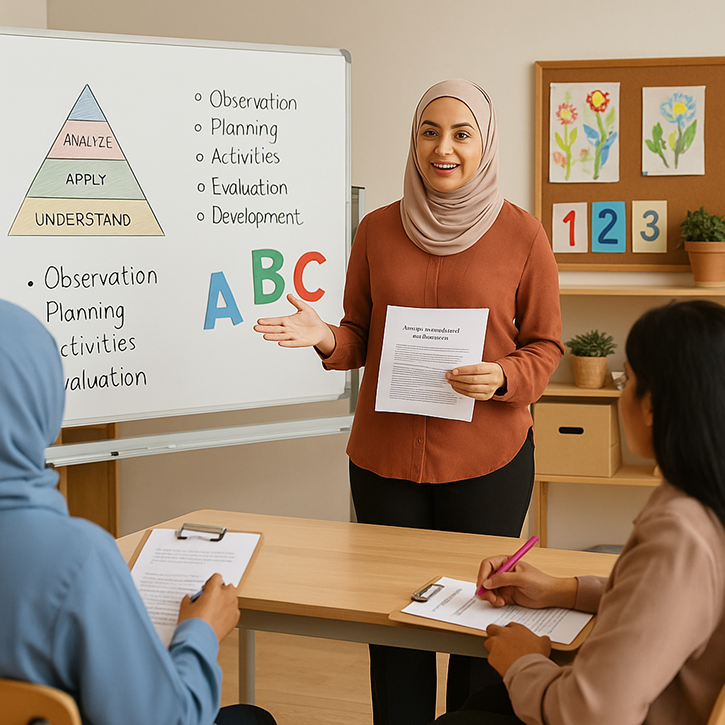
What you get during rollout
Planning + assessment workflows
Templates, observation tools, and a consistent cycle your team can follow.
Coaching to convert into practice
Training + follow-up guidance so implementation doesn’t stay on paper.
Leadership visibility
Clear checkpoints and outputs leadership can monitor and enforce.
Request Curriculum Pack →
View FAQs
Implementation sequence
Four steps. Clear ownership.
Each step has a defined output so leadership can track implementation.
Onboarding & alignment
Confirm age groups, language needs, and existing curriculum context.
Onboarding & alignment
Confirm age groups, language needs, and existing curriculum context.
Onboarding & alignment
Confirm age groups, language needs, and existing curriculum context.
Onboarding & alignment
Confirm age groups, language needs, and existing curriculum context.
FAQ
What makes Global Childhood Curriculum different — and how implementation works.
Decision-makers typically ask the same questions: differentiation, alignment, language, implementation speed, and follow-up support. This section answers them directly.
| Model / Framework | Core Strength (when implemented well) | Primary Implementation Requirement | Limits (relative to Global Childhood Curriculum) |
|---|---|---|---|
| Global Childhood Curriculum GCA Product |
A future-ready, research-informed curriculum system combining strong pedagogy with modern priorities: AI literacy as a tool, sustainability, design thinking, and ethical citizenship — integrated into the learning architecture. |
Leadership alignment + structured teacher onboarding (planning, observation, assessment) supported by training, coaching, and optional implementation visits. | None by design — built to work across diverse contexts. It is intentionally globally relevant and locally adaptable without restricting your audience to a single license or regulator. |
| EYFS (UK framework) | Clear domains, learning outcomes, and compliance-ready structure. Strong foundation for consistency and documentation. | High-quality planning cycle + observation-to-next-steps + leadership quality assurance. | Typically not built as a future-focused system by default. Technology/AI, sustainability, and design thinking are not structurally central unless added intentionally. |
| Montessori | Independence, concentration, mastery, and strong routines through prepared environments and materials. | Trained Montessori guides + environment fidelity + specialized materials. | High dependency on staff certification and materials; less adaptable for centers that want a broader curriculum spine with modern cross-cutting themes (AI/ethics/sustainability). |
| Reggio Emilia (approach) | Inquiry, creativity, documentation culture, and strong learning identity. Excellent for premium differentiation. | Highly skilled educators + documentation systems + strong leadership; difficult to standardize at scale. | Not “plug-and-play.” Can become inconsistent across classrooms. Does not inherently provide a structured implementation system for planning/assessment unless built. |
| HighScope | Predictable routines + active learning, measurable classroom structure, strong self-regulation outcomes. | Plan–Do–Review fidelity + routine discipline + ongoing coaching. | Can feel rigid if over-structured; does not inherently center future-ready priorities like design thinking, sustainability, or ethical technology engagement. |
| Waldorf / Steiner | Rhythm, imagination, and strong wellbeing emphasis; calm learning environments. | Staff alignment + parent expectation alignment + rhythm-based programming. | Less aligned to settings needing modern documentation, measurable outcomes, or explicit engagement with technology and contemporary citizenship themes. |
| IB PYP (early years alignment) | Concept-driven inquiry and global-minded learner profile; strong transition into primary years. | Heavy planning discipline + concept-based teaching + documentation. | Planning-heavy and can drift into “schoolification” in ages 3–5 if not carefully led; not inherently structured around play as the primary engine of learning unless implemented intentionally. |
| Creative Curriculum | Teacher-friendly thematic planning + assessment structure; consistency across teams. | Fidelity to planning and assessment tools + routine systems. | Risk of theme-driven activities without depth; future-facing priorities (AI/ethics/design/sustainability) are not structurally embedded unless added. |
AI, sustainability & design thinking are built in
Not as “extra activities,” but as integrated learning priorities across the curriculum architecture — including ethics, citizenship, systems thinking, and responsible technology use.
It’s a system your leadership can manage
Planning templates, observation/assessment tools, inclusion guidance, and leadership orientation — enabling consistent implementation across classrooms and branches.
Works alongside other curricula
The Global Childhood Curriculum functions as an approach and framework spine — adaptable to your existing curriculum, culture, and regulatory context without forcing a full replacement.
What’s so different compared to other curricula?Differentiation
Most curriculum models do one or two things exceptionally well (e.g., independence, inquiry, compliance structure). The Global Childhood Curriculum is designed as a future-ready curriculum system — it combines strong early years pedagogy with explicit, integrated priorities that most curricula treat as optional.
- Future readiness is structural: AI as a tool, sustainability, ethical citizenship, and design thinking are embedded in the learning architecture (not added as “special weeks”).
- Leadership control: provides planning, observation and assessment systems that enable consistency across classrooms and branches.
- Globally relevant and locally adaptable: supports diverse cultural and regulatory contexts without narrowing your positioning to a single authority.
Can we align it to our existing curriculum?Alignment
Yes. The Global Childhood Curriculum can be used as an approach and framework that overlays and strengthens what you already have. We can map your current curriculum to the seven pillars and ten areas of learning, then standardize planning and observation so implementation becomes consistent and measurable.
Bottom line: you do not need to “throw away” your current curriculum to benefit from this framework.
What languages is it available in? Arabic / English
The curriculum is designed for Arabic and English delivery. Arabic language, culture and national identity are included as a dedicated area of learning — not treated as an add-on.
If your team is bilingual or transitioning, we provide implementation guidance to maintain consistency across both languages.
How long does it take to implement? Timeline
Implementation speed depends primarily on teacher readiness and how quickly teams move from training to daily practice. From a delivery standpoint, we can complete the full curriculum delivery plus training and coaching within 90 days.
- Delivery: curriculum pack + tools + onboarding pathway (within the implementation window)
- Capability build: teacher learning and consistent application may take additional time depending on team maturity
We keep implementation controlled: onboarding → training → classroom rollout → review and improvement.
Do you provide follow-up support? Support
Yes. We provide ongoing training and implementation support. Refresher training is available upon request and is typically delivered as a paid add-on.
- Ongoing professional development and implementation coaching options
- Optional classroom/center evaluation visits with action plans
- Refresher training for new hires or re-alignment cycles
Who delivers the training in the GCC? Delivery model
The Global Childhood Curriculum is a Global Childhood Academy (GCA) product. In the GCC region, Arabian Child acts as the local facilitator and training provider — supporting onboarding, rollout, training, coaching, and optional implementation visits.
Most curriculum models do one or two things exceptionally well (e.g., independence, inquiry, compliance structure). The Global Childhood Curriculum is designed as a future-ready curriculum system — it combines strong early years pedagogy with explicit, integrated priorities that most curricula treat as optional.
- Future readiness is structural: AI as a tool, sustainability, ethical citizenship, and design thinking are embedded in the learning architecture (not added as “special weeks”).
- Leadership control: provides planning, observation and assessment systems that enable consistency across classrooms and branches.
- Globally relevant and locally adaptable: supports diverse cultural and regulatory contexts without narrowing your positioning to a single authority.
Yes. The Global Childhood Curriculum can be used as an approach and framework that overlays and strengthens what you already have. We can map your current curriculum to the seven pillars and ten areas of learning, then standardize planning and observation so implementation becomes consistent and measurable.
Bottom line: you do not need to “throw away” your current curriculum to benefit from this framework.
The curriculum is designed for Arabic and English delivery. Arabic language, culture and national identity are included as a dedicated area of learning — not treated as an add-on.
If your team is bilingual or transitioning, we provide implementation guidance to maintain consistency across both languages.
Implementation speed depends primarily on teacher readiness and how quickly teams move from training to daily practice. From a delivery standpoint, we can complete the full curriculum delivery plus training and coaching within 90 days.
- Delivery: curriculum pack + tools + onboarding pathway (within the implementation window)
- Capability build: teacher learning and consistent application may take additional time depending on team maturity
We keep implementation controlled: onboarding → training → classroom rollout → review and improvement.
Yes. We provide ongoing training and implementation support. Refresher training is available upon request and is typically delivered as a paid add-on.
- Ongoing professional development and implementation coaching options
- Optional classroom/center evaluation visits with action plans
- Refresher training for new hires or re-alignment cycles
The Global Childhood Curriculum is a Global Childhood Academy (GCA) product. In the GCC region, Arabian Child acts as the local facilitator and training provider — supporting onboarding, rollout, training, coaching, and optional implementation visits.
Want the recommended pathway for your center?
Submit your details and we’ll send the curriculum pack plus a recommended implementation and support plan based on your center type and number of branches.
Need alignment to EYFS / Montessori / Reggio?
We can map your current approach to the pillars and areas of learning, then standardize planning and observation to improve consistency without forcing a full replacement.
Ready to receive the curriculum pack and recommendation?
Submit the form and we’ll respond with the right package for your center type and timeline.
See what’s included
Request Curriculum Pack
Membership Program

Early Childhood Organization Improvement
Delivered by Arabian Child • ECRA-aligned improvement and accreditation readiness
Membership Program
Operational improvement + quality elevation — with a clear path to ECRA accreditation.
Arabian Child supports nurseries, preschools, and school Early Years divisions to improve quality, strengthen systems, and drive enrollment performance. We deliver practical implementation support across leadership, operations, environment, workforce, and curriculum.
This work can be delivered as a full improvement program, or as targeted support against priority gaps.
-
6 Quality Domains
-
80 Quality Standards
-
5 Quality Tiers
6
QUALITY DOMAINS
80
QUALITY STANDARDS
5
QUALITY TIERS
Request Improvement Support →
View ECRA Services →
Learn About ECRA →
What “improvement support” actually covers
Centers typically engage us for combinations of: enrollment & admissions systems, curriculum planning and classroom practice, teaching approaches and routines, environment redesign, management systems & SOPs, workforce & HR foundations, safeguarding/health & safety compliance, and training/CPD planning — with ECRA as the measurement and accountability framework.
How we deliver
A structured implementation cycle
Diagnose:
baseline audit + gap map (operations, classrooms, evidence).
Plan:
prioritized roadmap with owners, timelines, and KPIs.
Implement:
coaching + tools + staff enablement across the center.
Validate:
evidence pack + mock readiness + next-step plan.
Start ECRA Track →
Talk to Our Team
Benefits are built to support leadership decisions, staff development, and measurable quality improvement.
01
Business Growth & Enrollment Systems
Admissions journey design, lead handling SOPs, tour scripts, follow-up sequences, and KPI tracking to improve inquiry-to-enrollment conversion.
02
ECRA Accreditation Support
Self-evaluation setup, evidence preparation, improvement tracking, environment & interaction audit, readiness visits, and full accreditation support.
03
Academic Quality + Classroom Practice
Curriculum planning systems, observation tools, play-based practice standards, behavior guidance, daily routines, and coaching/modeling where needed.
04
Environment & Facility Design
Classroom zoning and learning center standards, equipment lists, wall display standards, outdoor safety standards, and model classroom setup.
05
Operations, HR, and Compliance
Policies & SOPs, standard forms, dashboards, staffing structures, onboarding, supervision standards, safeguarding, emergency procedures, and compliance routines.
06
Training & Professional Development
Pre-service training, termly PD calendars, LearnPro (optional), monthly PD through partner programs, and skills-focused microtraining aligned to observed gaps.
Built by Global Childhood Academy
A future-ready early childhood curriculum — research-based and expert-developed.
The Global Childhood Curriculum is developed by Global Childhood Academy (GCA) as a future-ready curriculum product for modern early years practice. It is built on research, designed for real-world implementation, and developed with input from leading experts in early childhood education and child development.
This is not a theme pack or activity bank — it is a structured curriculum framework with clear pillars, areas of learning, and implementation tools that leadership teams can manage.
Research-based foundation
Anchored in developmental science and contemporary early childhood research.
Expert-developed
Developed with input from recognized early years experts to ensure quality and credibility.
Future-ready by design
Integrates ethics, sustainability, STEAM, design thinking, and responsible technology engagement.